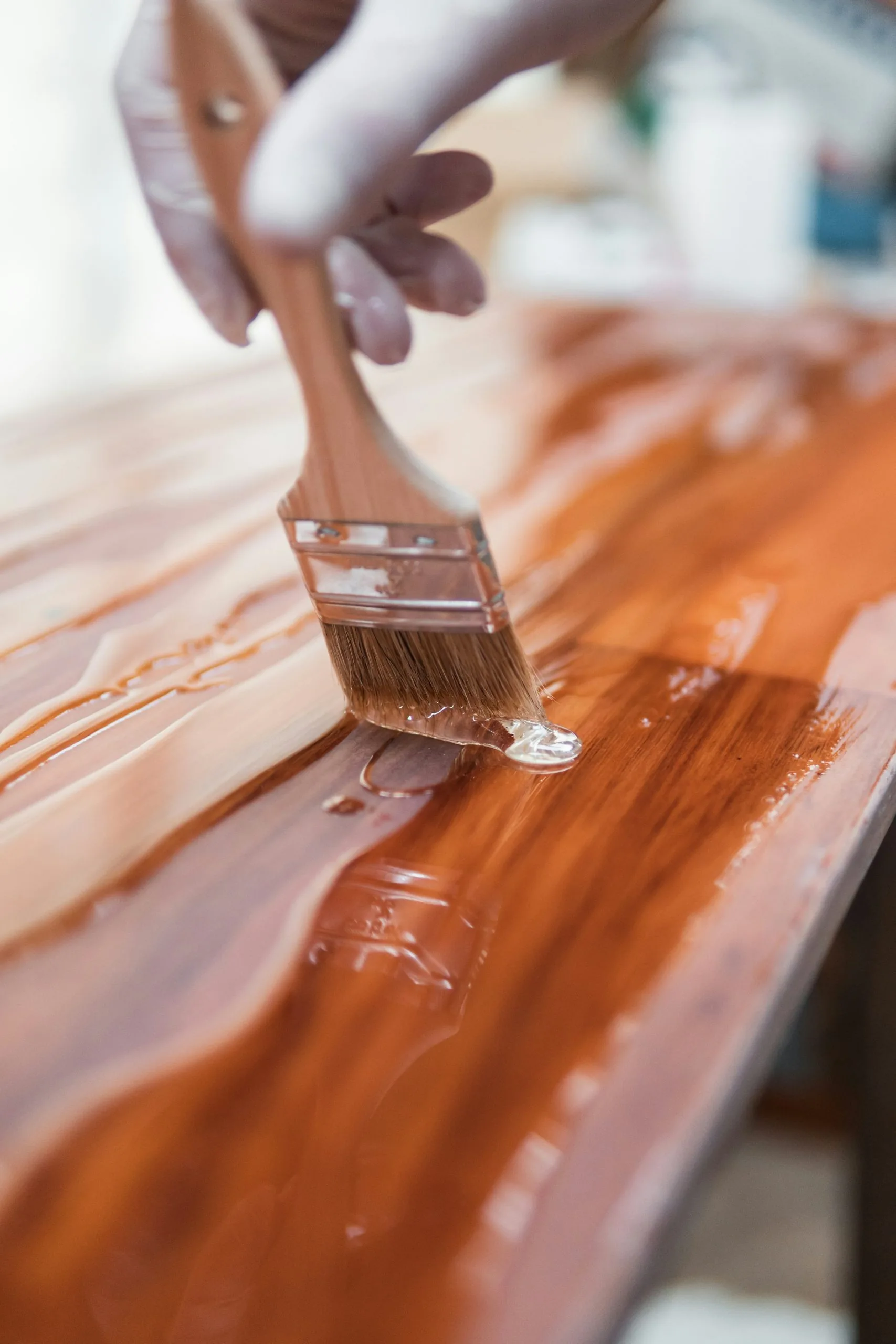
Short answer: Choose oil for a natural, matte look that is easy to maintain, stain to add colour without hiding the grain, and lacquer for the best protection against stains and wear in high-traffic rooms. It is best to finish the slats before installation.
Once you have chosen the wood species and dimensions for your slat wall, one important question remains: How should the slats be finished? The finish has a big impact on appearance, durability, and future maintenance.
Here we compare oil, stain, and lacquer to help you choose the right finish for your project.
1. Oil for a natural, matte look
Advantages
- highlights the wood’s natural texture and color
- gives a matte, warm finish
- easy to apply and maintain
Disadvantages
- offers less protection against stains and wear than lacquer
- requires regular maintenance
Best for you if: you want a natural, warm look and are comfortable maintaining the wall over time.
2. Stain for color without hiding the grain
Advantages
- adds color while still keeping the wood grain visible
- comes in many tones such as gray, brown, black, and white
- gives a modern, even expression
Disadvantages
- often benefits from a top coat for added protection
- can be more demanding to apply evenly
Best for you if: you want to introduce a specific color or stronger contrast without losing the natural character of the wood.
3. Lacquer for extra protection and a smoother surface
Advantages
- gives strong protection against stains, dust, and wear
- available in gloss, semi-gloss, or matte finishes
- requires relatively little maintenance
Disadvantages
- can remove some of the natural feel
- harder to correct if the application goes wrong
Best for you if: you want a durable slat wall in higher-traffic areas or spaces where the wall may be exposed to dirt and daily wear.
Tips for getting the finish right
- treat the slats before installation, especially the sides and back
- use a brush, roller, or spray setup depending on the finish and product
- test the color on an offcut first
- work in a clean environment and let the slats dry properly
Summary
| Finish | Look | Maintenance | Protection | Recommended use |
|---|---|---|---|---|
| Oil | Natural, matte | High | Low to medium | Bedrooms, living rooms |
| Stain | Colored, grain visible | Medium | Medium | Modern spaces, contrast |
| Lacquer | Smooth, even finish | Low | High | Hallways, kitchens, public-facing spaces |
Which finish suits best is tied to the material. Read more about which wood species work best for slat walls, and about how to clean and maintain a slat wall afterwards.
The right finish gives your slat wall both a strong look and a longer lifespan. Once you know how many slats you need, our slat wall calculator also helps you estimate the overall material quantity more confidently.
Frequently asked questions
Should I finish the slats before or after installation?
It is best to finish the slats before installation, and remember the sides and back. That avoids unfinished patches appearing as the wood moves, and gives a more even result.
Which finish needs the least maintenance?
Lacquer needs the least maintenance and protects best against stains and wear. Oil gives a more natural look but has to be refreshed regularly, while stain often needs a top coat for protection.
How much finish do I need for the wall?
It depends on how many linear metres of slats you have. On a reference wall of 240 cm with 48 mm slats and an 18 mm gap (66 mm coverage), that is around 15 slats per metre, so 37 slats and about 97.7 linear metres with a 10% allowance, figures you can use when working out the amount of oil, stain, or lacquer.