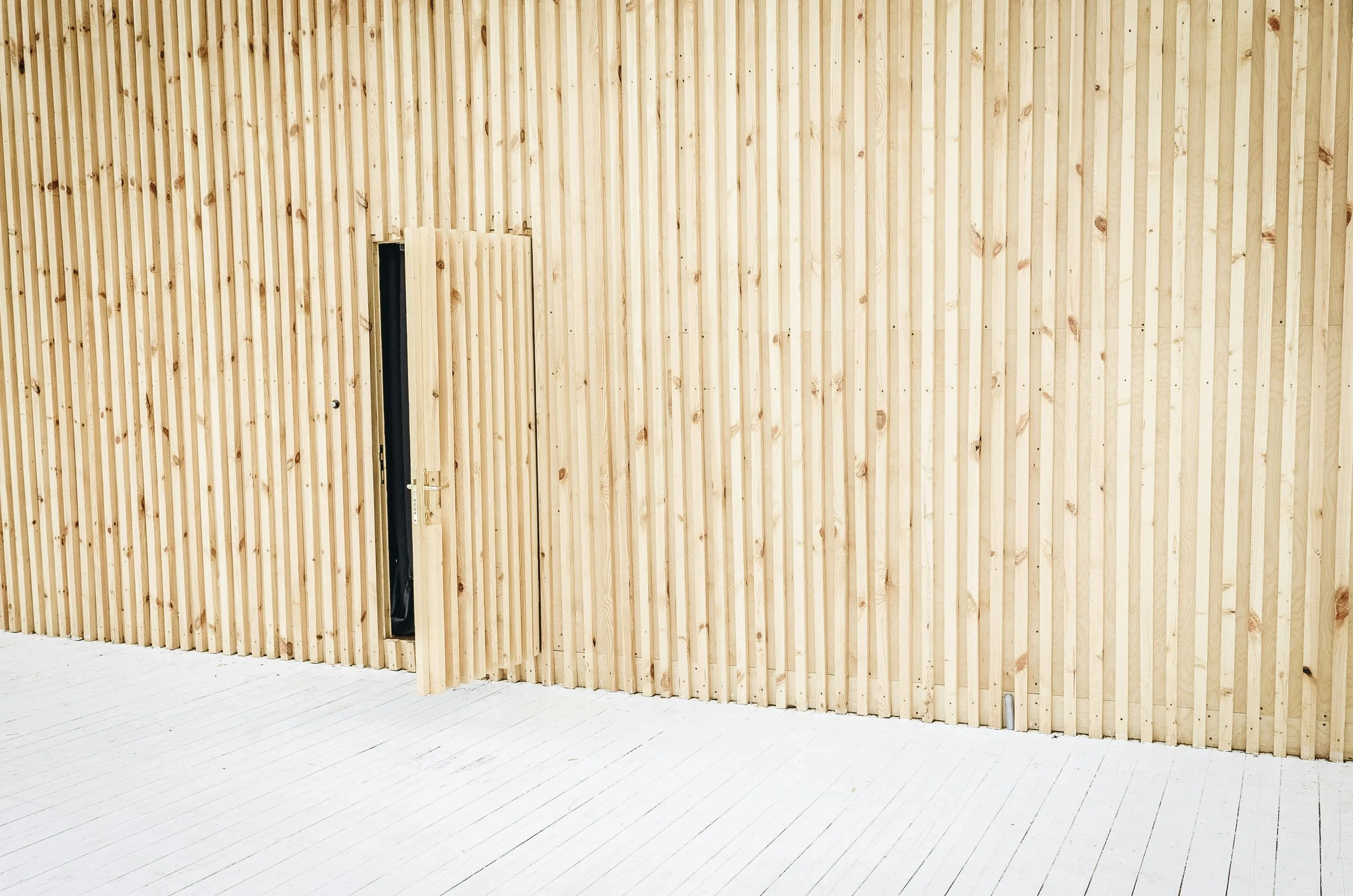
Short answer: An outdoor slat wall has to withstand rain, snow, UV light, and temperature swings, and needs weatherproof materials, stainless screws, and good ventilation. Indoors you have more material choices, such as MDF, less maintenance, and no weather-resistance requirement.
Slat walls have become popular both indoors and outdoors, but an outdoor slat wall places very different demands on the build than an interior one. The wrong material choice or finish can cause the wall to crack, warp, or fade over time.
This article looks at the key differences and what you should keep in mind when planning the project.
Indoor slat walls
Typical uses
- living rooms
- bedrooms
- hallways
- offices
- TV walls or headboards
Advantages
- lower maintenance requirements
- more material choices, including MDF
- easier installation directly on the wall or on a backer board
Materials that usually work well
- MDF for painted finishes
- solid wood such as pine or oak
- veneered slats
Finish
- oil, stain, or paint depending on the look you want
- no need for weather resistance
Outdoor slat walls
Typical uses
- house or cabin facades
- patio screens
- carports or entry areas
- fences
Requirements and challenges
- they need to handle rain, snow, UV exposure, and temperature swings
- they need good drainage and ventilation
- they should be installed with weather-resistant fasteners
Recommended materials
- pressure-treated pine
- thermally modified pine or other heat-treated wood
- oil-treated outdoor timber
- longer-lasting materials such as Kebony or Accoya
Finish
- untreated wood will typically weather and gray naturally
- UV-protective oil or stain can help preserve the original color
Quick comparison
| Property | Indoor | Outdoor |
|---|---|---|
| Environment | Stable temperature, dry | Rain, sun, cold, humidity |
| Material choice | MDF, oak, pine | Treated pine, thermally modified wood, Kebony |
| Maintenance | Low | Medium to high |
| Installation | Adhesive, nails | Screws, ventilation, weather-resistant fixing |
Conclusion
A slat wall can be just as beautiful outdoors as indoors, as long as you choose the right material and adapt the construction to the environment. What works perfectly inside does not automatically hold up in exposed weather. Material choice is central here, so read about which wood species work best for slat walls, and about how to get an outdoor slat wall ready for spring after winter.
Before you buy materials, use our slat wall calculator to estimate how many slats and how much linear footage you need for either type of project.
Frequently asked questions
Which materials suit an outdoor slat wall?
Choose weatherproof materials such as pressure-treated pine, thermally modified wood, oil-treated outdoor timber, or Kebony and Accoya. They handle moisture and temperature swings better than ordinary indoor wood.
Can I use MDF outdoors?
No. MDF handles moisture poorly and is only suited to dry indoor rooms. Outdoors you should use moisture-resistant solid wood or specially treated timber.
How many slats do I need outdoors or indoors?
The count is set by the measurements, not by whether the wall is outdoors or indoors. On a reference wall of 240 cm with 48 mm slats and an 18 mm gap (66 mm coverage), that is around 15 slats per metre, so 37 slats and about 97.7 linear metres with a 10% allowance.