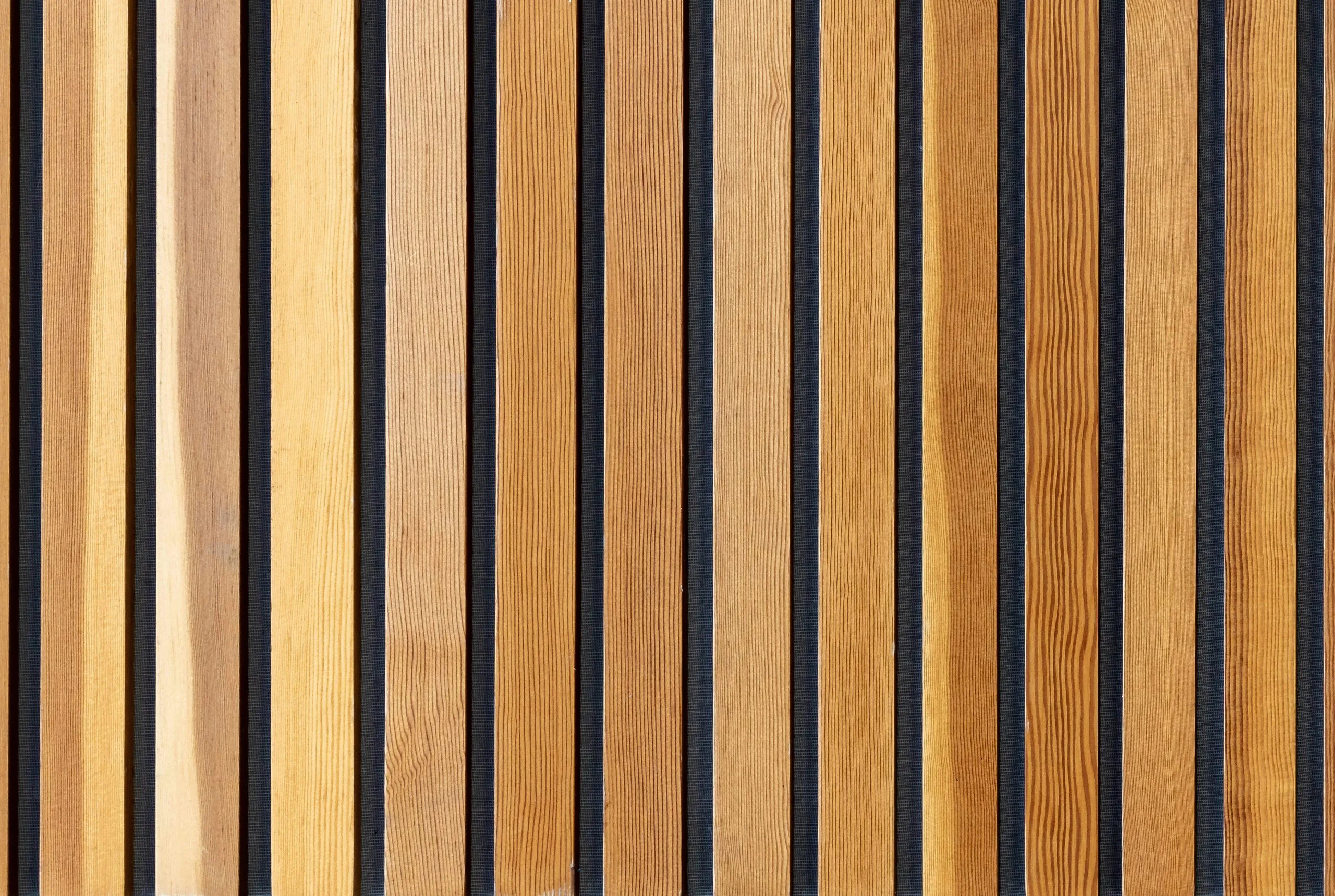
An acoustic slat wall is made by fixing acoustic felt to the wall or a board and mounting slats over it with even spacing. The wood breaks up the sound waves and the felt absorbs them, so echo and noise are reduced. A wall of 240 x 240 cm needs about 37 slats and 97.7 linear metres with a 10% allowance.
Slat walls are not just visually appealing. They can also make a room feel quieter and more comfortable. When wood slats are combined with sound-absorbing material, you get a solution that improves acoustics while also adding a more refined look.
Here is how acoustic slat walls work and where they can make sense in a home or workplace.
Why use acoustic slat walls?
Modern buildings and open-plan layouts often create poor acoustics:
- echo
- uncomfortable noise
- harder conversation conditions
By using slats with acoustic felt behind them, sound waves are both broken up and absorbed, which usually makes the room feel calmer.
How does it work?
- the slats break up sound physically
- the acoustic felt behind them absorbs part of the sound energy
- the combination reduces echo and noise more effectively than a plain hard wall
This principle is common in offices, restaurants, and home theaters, but it also works well in private homes.
Where can you use it?
- living rooms to reduce echo and create a softer atmosphere
- offices or meeting rooms to improve focus and speech clarity
- TV rooms or home theaters for a better sound experience
- kitchens with hard surfaces and high ceilings to soften sound reflections
How do you build one?
- Install acoustic felt, often on a board or directly on the wall
- Fix the slats over the felt with even spacing
- Use adhesive or hidden nailing for a cleaner look
- Use our slat wall calculator to estimate slat count and required length, or follow the formula for how many slats you need
The felt is typically available in rolls or panels and comes in different colors and thicknesses.
Styling tips
- black felt + oak slats = modern and elevated
- gray felt + light pine = softer and more Nordic
- stained slats add depth and tone variation
- hidden lighting can make the wall feel even more atmospheric
Summary
Acoustic slat walls are a smart way to improve both sound quality and the overall mood of a room. They work just as well at home as in more professional environments, and they can be tailored to the visual direction you want. For more ideas, see 10 inspiring ways to use slat walls at home.
Use our slat wall calculator to plan the project and estimate how much material you need.
Frequently asked questions
How does a slat wall dampen sound?
The slats break up the sound waves physically, while the acoustic felt behind them absorbs sound. Together they noticeably reduce echo and noise, especially in rooms with hard surfaces.
How many slats do I need for an acoustic wall?
With 48 mm slats and an 18 mm gap, each slat covers 66 mm, so around 15 slats per metre. A 240 cm wide wall needs 37 slats.
Where do acoustic slat walls work best?
They work well in living rooms, offices, meeting rooms, home theatres, and kitchens with high ceilings, places where hard surfaces create a lot of echo and noise.